
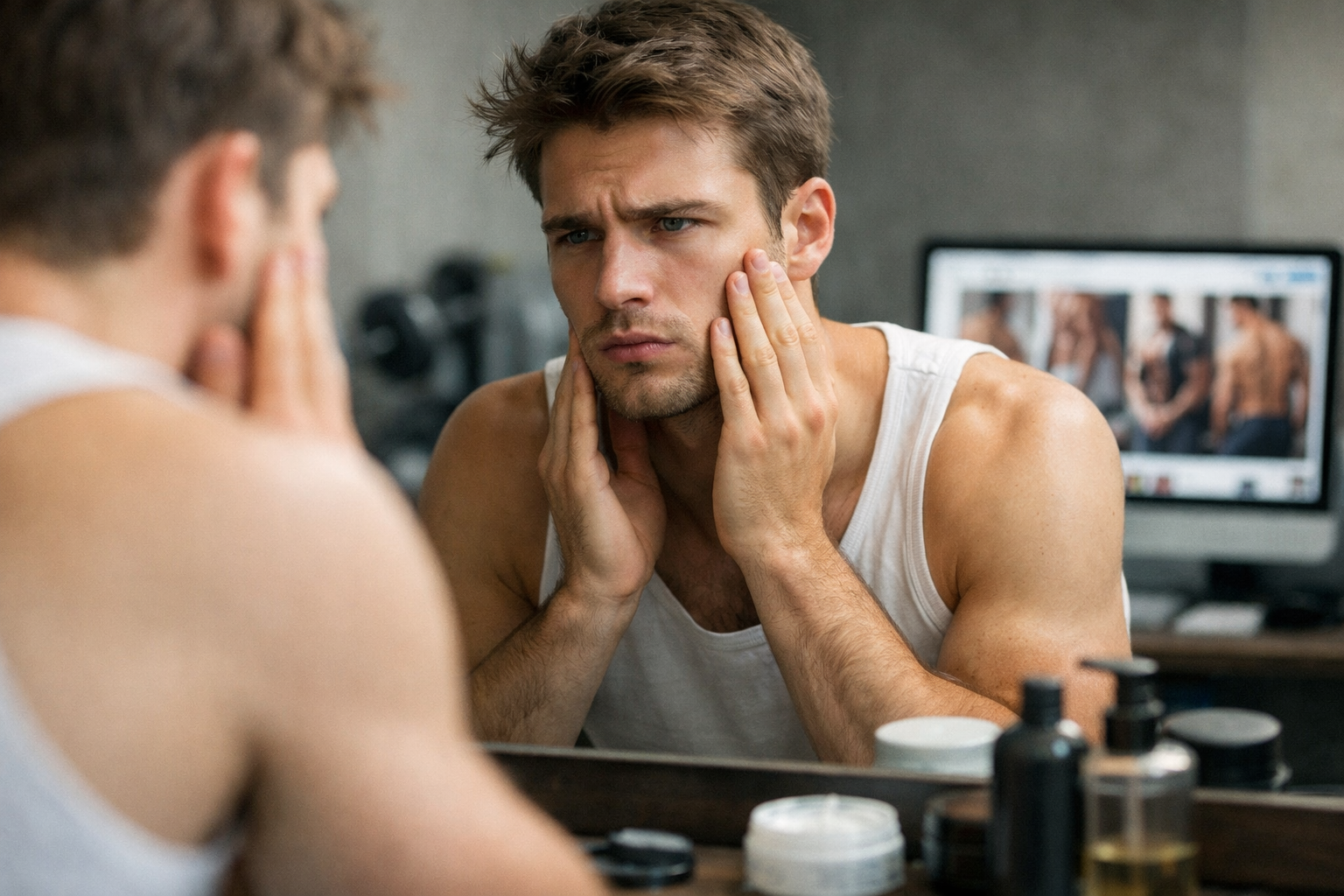
What Is Looksmaxing?
The term “looksmaxing” has rapidly migrated from obscure online forums into mainstream awareness, reflecting a growing preoccupation among young men with optimizing their physical appearance. While self-improvement is not inherently harmful, the intensity and rigidity often associated with looksmaxing suggests something deeper—an emerging pattern that parallels body dysmorphia and broader forms of psychological distress.
Looksmaxing typically refers to a set of practices aimed at maximizing one’s physical attractiveness. These can range from benign habits like grooming, fitness, and skincare to more extreme behaviors such as rigid dieting, compulsive exercise, or even pursuing cosmetic procedures. What distinguishes looksmaxing from ordinary self-care is its underlying belief system: that one’s worth, success, and romantic prospects are almost entirely determined by physical appearance.
The Influence of Social Media
For many young men, this belief system does not emerge in a vacuum. Social media platforms amplify idealized male physiques and facial features, often presenting unrealistic standards as attainable norms. Algorithms reward hyper-visual content, reinforcing a narrow definition of attractiveness that is difficult—if not impossible—for most individuals to achieve (Perloff, 2014).
A Shift in Male Body Image Pressures
Historically, body image concerns have been framed as predominantly affecting women. However, recent research indicates that men are increasingly experiencing similar pressures. Studies show rising rates of body dissatisfaction among adolescent and young adult males, particularly related to muscularity and leanness (Griffiths et al., 2016). Looksmaxing can be seen as a behavioral manifestation of this dissatisfaction.
Cognitive Distortions and Body Dysmorphia
At its core, looksmaxing often reflects distorted thinking patterns. Individuals may fixate on perceived flaws—jawline structure, height, skin quality—and overestimate their importance in social and romantic success. This cognitive distortion mirrors key features of body dysmorphic disorder (BDD), where individuals become preoccupied with imagined or minor physical imperfections (American Psychiatric Association, 2013).
Unlike general self-improvement, looksmaxing communities frequently reinforce these distortions. Online forums and content creators may rank physical traits, assign “scores,” and promote deterministic views about attractiveness. This can create an echo chamber in which young men internalize harsh judgments and develop a sense of hopelessness about their perceived shortcomings.
Psychological Effects of Looksmaxing
The psychological toll of this mindset can be significant. Persistent self-scrutiny often leads to anxiety, depression, and social withdrawal. Young men may avoid dating, social events, or even everyday interactions due to feelings of inadequacy. Over time, this can erode self-esteem and contribute to a negative self-concept.
In many cases, looksmaxing behaviors become compulsive. Hours spent analyzing one’s face, comparing oneself to others, or researching cosmetic interventions can interfere with daily functioning. These patterns resemble the repetitive behaviors seen in BDD, such as mirror checking or excessive grooming (Phillips, 2005).
When Habits Become Compulsive
Another concerning aspect is the intersection of looksmaxing with broader issues of masculinity. Traditional norms often discourage emotional vulnerability in men, making it less likely for them to express insecurities openly. As a result, distress related to body image may be channeled into seemingly “productive” behaviors like self-optimization, masking deeper emotional struggles.
The Commercialization of Insecurity
The commercialization of male insecurity also plays a role. The grooming, fitness, and cosmetic industries increasingly target men, offering products and procedures that promise transformation. While these industries can promote healthy habits, they may also exploit vulnerabilities by framing normal variation as deficiencies that need correction.
Importantly, not all individuals who engage in looksmaxing experience psychological distress. For some, it may remain a moderate and balanced form of self-care. However, the line between healthy improvement and pathological preoccupation can be thin, particularly when self-worth becomes contingent on appearance.
The Impact of Dating Narratives
Cultural narratives around dating and success further exacerbate the issue. In some online spaces, attractiveness is portrayed as the primary determinant of romantic outcomes, overshadowing qualities like personality, kindness, and compatibility. This reductionist view can lead young men to invest disproportionately in appearance at the expense of other aspects of personal development.
There is also a feedback loop at play. As individuals invest more time and energy into looksmaxing, they may become more sensitive to perceived rejection or lack of validation. This, in turn, reinforces the belief that they are not “good enough,” perpetuating the cycle of dissatisfaction.
The Comparison Trap
The role of comparison cannot be overstated. Constant exposure to curated images fosters upward social comparison, where individuals measure themselves against those they perceive as more attractive. Research has consistently linked such comparisons to decreased body satisfaction and increased depressive symptoms (Festinger, 1954; Fardouly & Vartanian, 2016).
In extreme cases, looksmaxing may lead to risky behaviors, including the misuse of supplements, steroids, or unregulated cosmetic procedures. These actions can have serious physical and psychological consequences, underscoring the need for greater awareness and intervention.
How Therapy Can Help
Counseling can play a crucial role in addressing these issues. Therapeutic approaches such as cognitive-behavioral therapy (CBT) are particularly effective in treating body dysmorphic symptoms. CBT helps individuals identify and challenge distorted beliefs about appearance, reduce compulsive behaviors, and develop a more balanced self-image (Veale et al., 2014).
In therapy, young men can also explore the underlying emotional drivers of their preoccupation with appearance. This may include experiences of rejection, bullying, or internalized societal expectations. By addressing these root causes, counseling can facilitate more sustainable and meaningful change.
Building Self-Compassion
Another important aspect of counseling is fostering self-compassion. Many individuals engaged in looksmaxing hold themselves to harsh and unforgiving standards. Learning to treat oneself with kindness and understanding can counteract the negative self-talk that fuels body dissatisfaction.
Group therapy or support groups may also be beneficial, particularly in reducing feelings of isolation. Hearing others share similar struggles can normalize the experience and provide alternative perspectives on self-worth and identity.
Prevention and Awareness
Prevention efforts should not be overlooked. Educating young men about media literacy, body diversity, and the psychological impact of comparison can help mitigate the influence of harmful online content. Encouraging open conversations about body image in male populations is equally important.
Ultimately, the rise of looksmaxing reflects a broader cultural shift in how men relate to their bodies. While striving for self-improvement is natural, it becomes problematic when it is driven by fear, shame, or a belief that one’s value is purely aesthetic. Recognizing looksmaxing as a potential form of body dysphoria allows for a more compassionate and clinically informed response.
Moving Toward a Healthier Identity
As awareness grows, there is an opportunity to redefine masculinity in a way that embraces vulnerability, authenticity, and holistic well-being. In doing so, young men can move beyond the mirror and toward a more integrated and fulfilling sense of self.
References
American Psychiatric Association. (2013). Diagnostic and Statistical Manual of Mental Disorders (5th ed.).
Fardouly, J., & Vartanian, L. R. (2016). Social media and body image concerns. Current Opinion in Psychology, 9, 1–5.
Festinger, L. (1954). A theory of social comparison processes. Human Relations, 7(2), 117–140.
Griffiths, S., Murray, S. B., & Touyz, S. (2016). Disordered eating and the muscular ideal. Current Opinion in Psychiatry, 29(6), 406–411.
Perloff, R. M. (2014). Social media effects on young women’s body image concerns. Sex Roles, 71, 363–377.
Phillips, K. A. (2005). The Broken Mirror: Understanding and Treating Body Dysmorphic Disorder.
Veale, D., Gledhill, L. J., Christodoulou, P., & Hodsoll, J. (2014). Body dysmorphic disorder. The British Journal of Psychiatry, 204(5), 324–329.
TCA Counseling Group in Boston has therapists who work with body dysmorphia in young men.
