
Understanding Cognitive Behavioral Therapy and How Therapists at TCA Counseling Use It to Help Clients Thrive
When people begin therapy, they often hope for relief from overwhelming emotions—persistent anxiety, discouraging self-doubt, or a lingering sense of sadness that seems difficult to shake. While the sources of emotional pain can be complex, one of the most effective therapeutic approaches focuses on a simple but powerful insight: the way we think shapes the way we feel and behave.
This principle is at the heart of Cognitive Behavioral Therapy (CBT), one of the most widely researched and effective forms of psychotherapy available today. CBT has become a cornerstone of modern mental health treatment because it provides individuals with practical tools to understand their thoughts, manage difficult emotions, and make meaningful changes in their lives.
At TCA Counseling, therapists frequently incorporate CBT techniques to help clients build healthier patterns of thinking and behavior. By learning how to identify and challenge unhelpful thoughts, individuals can gain greater control over their emotional lives and develop lasting skills for resilience and well-being.
The Connection Between Thoughts, Feelings, and Behavior
One of the central ideas in CBT is that our emotional reactions are influenced less by events themselves and more by the way we interpret those events. Two people can experience the same situation yet respond in dramatically different ways depending on how they think about it.
For example, imagine receiving constructive criticism at work. One person might interpret the feedback as evidence that they are failing and think, “I’m terrible at my job.” Another person might think, “This feedback will help me improve.” The situation is the same, but the interpretation creates very different emotional responses.
CBT helps people recognize these internal thought patterns and evaluate whether they are accurate, helpful, or distorted. By learning to adjust the way they interpret experiences, individuals can begin to influence their emotional responses and behavioral choices in powerful ways.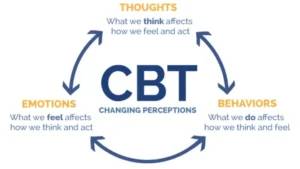
The Origins of Cognitive Behavioral Therapy
Cognitive Behavioral Therapy was developed in the 1960s by psychiatrist Aaron T. Beck, who was studying depression and its underlying psychological patterns. Beck observed that people experiencing depression often had persistent negative beliefs about themselves, their circumstances, and their future.
He called this pattern the cognitive triad, which includes negative views about the self, the world, and the future. These automatic thoughts often occur quickly and outside of conscious awareness, yet they strongly influence emotional experience.
Over time, Beck’s cognitive therapy combined with principles from behavioral psychology, creating the integrated approach now known as Cognitive Behavioral Therapy. Today, CBT is considered one of the most empirically supported therapies in psychology, with decades of research demonstrating its effectiveness across many mental health conditions.
Recognizing Cognitive Distortions
Many people struggling with anxiety or depression experience cognitive distortions, which are patterns of thinking that exaggerate problems or create unnecessarily negative interpretations of events.
Some of the most common distortions include:
Catastrophizing, in which individuals assume the worst possible outcome will occur.
Black-and-white thinking, where situations are viewed as entirely good or entirely bad with little middle ground.
Mind reading, the assumption that others are judging or criticizing us without clear evidence.
Overgeneralization, where a single negative event is interpreted as a never-ending pattern of failure.
Personalization, in which individuals blame themselves for events outside their control.
These thinking patterns can reinforce emotional distress and create cycles that are difficult to break. CBT helps individuals learn to recognize these distortions and develop more balanced and realistic perspectives.
What CBT Can Treat
One reason CBT is so widely used is that it can be applied to a broad range of psychological concerns. Research has demonstrated its effectiveness for many common mental health challenges.
CBT is frequently used to treat:
-
Depression
-
Generalized anxiety disorder
-
Panic disorder
-
Social anxiety
-
Obsessive-compulsive disorder
-
Post-traumatic stress disorder
-
Eating disorders
-
Insomnia
-
Stress and adjustment difficulties
In addition to treating diagnosable mental health conditions, CBT can help individuals improve everyday coping skills, manage work stress, and navigate major life transitions.
CBT and Depression
Depression often involves deeply ingrained patterns of negative thinking. Individuals experiencing depression may develop beliefs such as “I’m not good enough,” or “Nothing will ever improve.” Over time, these thoughts can reinforce feelings of hopelessness and withdrawal.
CBT addresses depression through two primary strategies: cognitive restructuring and behavioral activation.
Cognitive restructuring helps individuals examine the evidence behind their negative beliefs and develop more balanced ways of thinking. Behavioral activation focuses on gradually reintroducing meaningful activities that bring a sense of accomplishment or enjoyment.
When people begin engaging with life again—even in small ways—their mood often begins to improve. Over time, these behavioral changes can help break the cycle of depression.
CBT and Anxiety
Anxiety disorders often involve persistent worry about potential threats or negative outcomes. Individuals may overestimate the likelihood of danger or underestimate their ability to cope with challenging situations.
CBT helps individuals evaluate these fears more realistically. Therapists often guide clients through exercises that examine the evidence for anxious predictions and explore alternative interpretations.
In some cases, therapists also use exposure techniques, which involve gradually facing feared situations in a safe and supportive way. As individuals confront situations they have been avoiding, they often discover that their fears are less overwhelming than expected.
This process helps reduce anxiety while building confidence and resilience.
CBT for Trauma and Stress
Traumatic experiences can reshape how individuals view themselves and the world around them. Survivors of trauma may struggle with beliefs such as “I’m not safe,” or “What happened was my fault.”
CBT-based trauma treatments help individuals examine these beliefs and process traumatic memories in a structured and supportive way.
By addressing both the emotional impact of trauma and the beliefs that sustain distress, CBT can help individuals regain a sense of safety and control in their lives.
Practical Techniques Used in CBT
CBT is known for its practical, skill-based approach to therapy. Rather than focusing solely on insight, therapists help clients develop concrete strategies they can apply in everyday situations.
Some of the most common CBT techniques include:
Thought records, which help clients track situations, thoughts, and emotional reactions.
Cognitive restructuring, where individuals challenge and replace distorted thinking patterns.
Behavioral experiments, which test whether feared outcomes are as likely as they appear.
Problem-solving strategies, which help clients approach challenges in structured ways.
Relaxation and stress-management techniques, which reduce physiological symptoms of anxiety.
These strategies allow clients to actively practice new skills that promote emotional health.
The Role of Practice Between Sessions
Unlike some forms of therapy that focus primarily on conversation during sessions, CBT encourages clients to practice skills between meetings with their therapist.
These exercises might include journaling about thought patterns, trying new behaviors, or practicing relaxation techniques.
This process allows therapy to extend beyond the counseling room and into everyday life. The more individuals practice these strategies, the more natural they become.
The Collaborative Nature of CBT
CBT emphasizes collaboration between therapist and client. Rather than positioning the therapist as an authority who provides answers, CBT encourages a partnership focused on exploration and learning.
Therapists and clients work together to identify patterns, set goals, and evaluate progress. This collaborative approach helps individuals feel empowered in their own healing process.
Over time, clients often become increasingly skilled at identifying and adjusting their own thought patterns.
How Therapists at TCA Counseling Use CBT
At TCA Counseling, therapists integrate CBT techniques to help clients address a wide range of emotional challenges, from anxiety and depression to relationship stress and life transitions.
The process often begins with identifying patterns that may be contributing to emotional distress. Clients learn to recognize how their thoughts influence their feelings and behaviors.
Therapists then work with clients to develop personalized strategies for challenging unhelpful beliefs and building healthier habits. These may include cognitive reframing exercises, behavioral strategies for managing stress, or practical problem-solving techniques.
Because each client’s situation is unique, CBT interventions are carefully tailored to the individual’s goals and circumstances.
Building Skills That Last
One of the most powerful aspects of CBT is that it teaches skills that clients can continue using long after therapy ends.
Individuals who engage in CBT often report increased self-awareness, improved emotional regulation, and greater confidence in their ability to manage difficult situations.
Rather than simply reducing symptoms in the short term, CBT aims to help people build a toolkit for lifelong mental health.
Why CBT Continues to Be a Leading Therapy Approach
Over the past several decades, hundreds of studies have demonstrated the effectiveness of CBT for many psychological conditions. Because of this strong evidence base, CBT is widely recommended by mental health professionals, medical organizations, and treatment guidelines around the world.
Its structured, goal-oriented approach also makes it accessible to many individuals who prefer practical strategies and clear progress in therapy.
For many clients, CBT provides a roadmap for understanding their emotional patterns and creating meaningful change.
Moving Toward a Healthier Way of Thinking
Emotional struggles can sometimes make individuals feel trapped in patterns that seem impossible to escape. Yet one of the most hopeful insights from cognitive behavioral therapy is that thought patterns are not fixed.
With awareness, practice, and guidance, people can learn to recognize unhelpful thinking habits and replace them with healthier perspectives.
At TCA Counseling, therapists use CBT to help clients build these skills in a supportive and collaborative environment. Through this process, individuals can gain greater insight into their emotional lives and develop the resilience needed to navigate life’s challenges.
Changing the way we think does not eliminate life’s difficulties—but it can transform how we respond to them.
References
Beck, A. T. (1976). Cognitive Therapy and the Emotional Disorders. International Universities Press.
Butler, A. C., Chapman, J. E., Forman, E. M., & Beck, A. T. (2006). The empirical status of cognitive-behavioral therapy: A review of meta-analyses. Clinical Psychology Review, 26(1), 17–31.
Hofmann, S. G., Asnaani, A., Vonk, I. J., Sawyer, A. T., & Fang, A. (2012). The efficacy of cognitive behavioral therapy: A review of meta-analyses. Cognitive Therapy and Research, 36(5), 427–440.
Mayo Clinic. Cognitive behavioral therapy overview.
National Institute of Mental Health. Psychotherapies for mental health disorders.
